Arthurian Court
Some additional information concerning Arthur’s courts and his household staff.
Arthur’s Residences
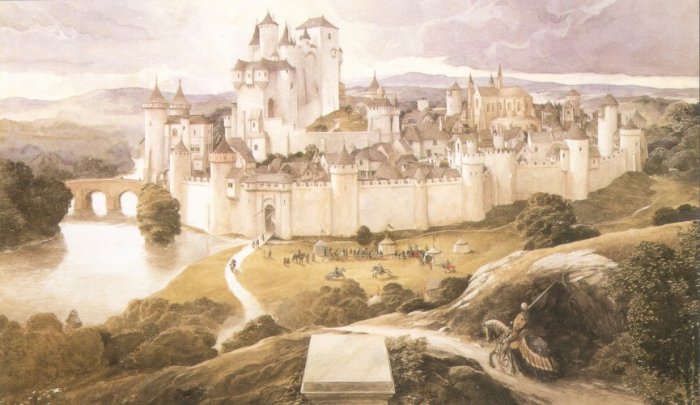
In medieval romances, Arthur didn’t have just one castle. He resided in many, depending on the seasons. Some of these castles existed during a time when the Romans had built fortresses and towns throughout England, Wales, and Cornwall. Others are known to have existed only during the time of the Norman period.
| **Site** | **Welsh Name** | **Roman Name** | **Location** |
| Caerleon on Usk, City of the Legions | Caer Llion ar Wysg | Isca Silurum, Isca | Monmouthshire, Wales |
| Camelot | near Caerleon, Wales? | ||
| Cardiff | Caerdydd, Caerdyv | Glamorgan (Morgannwg), Wales | |
| Carmarthen | Caer Vyriddin | Moridunum | Gwynedd, Wales |
| Caernarvon, Caernarfon | Caer Seint yn Arvon | Segontium | Gwynedd, Wales |
| Cardigan | Keredigyawn, Aberteifi (modern) | Ceredigion (formerly Cardiganshire), Wales | |
| Tintagel | Cornwall | ||
| Carlisle, Carduel | Caerleil | Luguvallium | Cumberland |
| Bath | Caer Vaddon, Baddon, Mons Badon? | Aquae Sulis | Somerset |
| Winchester | Venta Belgarum, Venta | Hampshire, Wessex | |
| London | Caer Lludd, Caer Llundein, Lundein, Lwndrwys | Londinium Lurdenbryg (Saxon) | |
| York | Eboracum | (North) Yorkshire, Northumbria | |
| Chester | Deva | Cheshire |
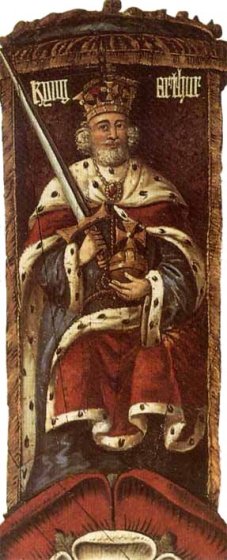
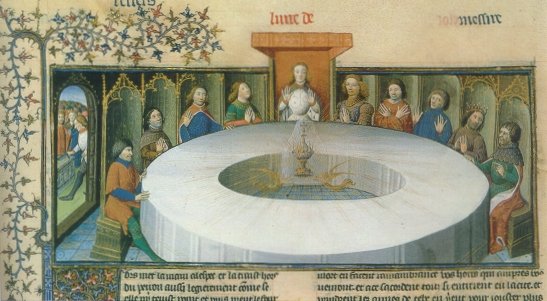
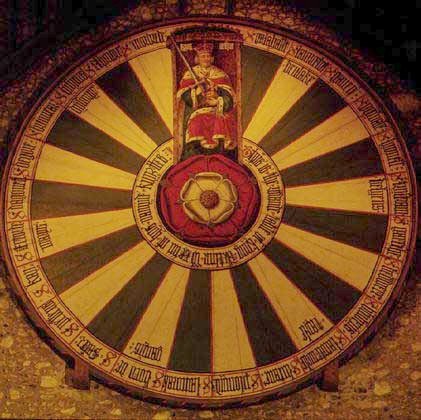
According to the Welsh traditions and early Arthurian authors like Geoffrey of Monmouth, the castle of Caerleon in Wales was his capital, not Camelot. The Welsh called it Caer Llion, while Geoffrey called it the City of Legions. Geoffrey said that when Arthur established an empire in western Europe, he made the City of Legions his plenary court, where he ruled this empire from. This was also the court, according to Wace, where Arthur constructed the Round Table.
According to several romances written by the French poet Chretien de Troyes (flourished in c. 1165-1182), Arthur’s resided in the castles of Cardigan, Carlisle (Carduel in French) and Camelot.
The first appearance of Camelot in Arthurian literature came from Le Chevalier à la charrette (“Knight of the Cart” or “Lancelot”), a medieval romance created by Chretien de Troyes in c. 1175. According to Chretien, Camelot was located not too far from Caerleon. He didn’t mention it as Arthur’s capital, but it was one of the king’s many residences (castles). Camelot didn’t become Arthur’s main castle until the later romances of the 13th century and afterwards, in such works as the Vulgate romances (1227-1235).
Scholars, historians and archaeologists have tried to establish the location of Camelot. Most modern experts are in favour of Winchester in Hampshire, though there are some who say it is Caerleon, or Cadbury Castle in Somerset. Because of the similarity in names, some would say it is located in Camelford in Cornwall or Queen Camel in Somerset. Personally, I think that Camelot was just an invention of Chretien de Troyes, which other writers had elaborated on.
The main importance of Tintagel, in Cornwall, was that Arthur was born in this castle. Fragments of luxury pottery dated to the 5th to 7th centuries AD have been discovered at Tintagel, showing that there was indeed some kind of fort and center of trade there during Arthur’s day. There was also a Celtic abbey built in the late Roman or early post-Roman period.
Tintagel was the scene of Arthur’s conception, where Merlin used his magic to allow King Uther Pendragon to seduce Igraine, wife of Duke Gorlois of Cornwall.
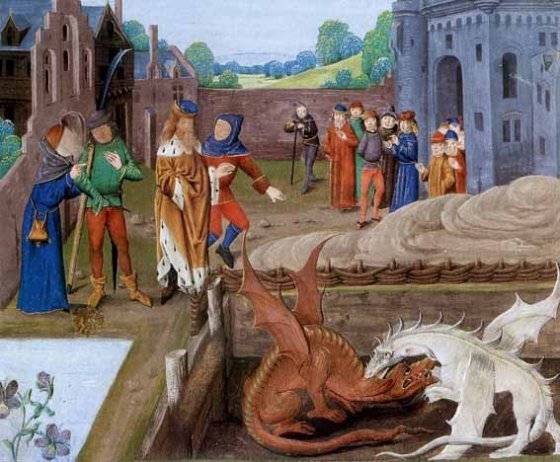
Carmarthen was best known as the place where Merlin was born. It seemed that this was castle Vortigern had tried to build, but kept falling down. Merlin established Carmarthen as his own residence, calling it Caer Myriddin or “Fortress of Myrddin” (Merlin).
Arthur also resided in Bath, Winchester, London, Cardiff (in Wales), and a whole lot of places throughout England. Some of writers even said that he lived in Brittany as well.
Below are other notable castles which were not residences of Arthur but do deserve mentioning. These sites were important in medieval times, and many also have connections to Roman Britain.
| **Site** | **Welsh Name** | **Roman Name** | **Location** |
| Canterbury | Durdvernum | Kent | |
| Rochester | Durobrivae | Kent | |
| Colchester | Camulodunum | Essex | |
| St. Albans | Verulamium | Hertfordshire | |
| Lincoln | Lindum | Lincolnshire | |
| Oxford | Oxnaford (Saxon) | Oxfordshire | |
| Cambridge | Durolipons | Cambridgeshire | |
| Gloucester | Glevum | Gloucestershire (capital of Mercia kingdom) | |
| Silchester | Calleva | Hampshire | |
| Leicester | Ratae | Leicestershire | |
| Doncaster | Danum | South Yorkshire | |
| Brough | Petuaria | ||
| Manchester | Mamucium | Greater Manchester | |
| Carlisle | Luguvalium, Luguvallium | Cumbria | |
| South Shield | Arbeia | ||
| Newcastle | Pons Aelius | Tyne and Wear; Northumberland | |
| Exeter | Isca, Isca Dumnoniorum | Devon | |
| Salisbury Plain? | Camlann | Wiltshire | |
| Glastonbury | Somerset | ||
| St. Michael's Mount | Mynyw | Icitis | Cornwall |
| Neath | Nidum | West Glamorgan, Wales | |
| Llandovery | Alabum | Wales | |
| Llania | Bremia | Wales | |
| Caer Sws | Mediomanum | Wales | |
| Caerhun | Canovium | Wales | |
| Anglesey | Môn | (Island) | |
| Edinburgh | Dun Eideann (Gaelic) | Scotland | |
| Glasgow | Glaschu (Gaelic) | Scotland | |
| Inchthuthil | Pinnata Castra | Scotland |
Court Staff
In any medieval kingdom, a ruler usually had a number of staff to serve him, some in the household and others in a military capacity. Arthur’s court was no exception to this rule.
Below is a shot list of Arthur’s personal staff. Most of these staff have titles of their own, and many of them also served as Arthur’s knights.
| **Name** | **Position** |
| [Merlin](/arthurian/camelot/merlin) | Adviser, sorcerer |
| [Sir Kay](/arthurian/camelot/round-table/sir-kay) | Seneschal |
| [Sir Bedivere](/arthurian/camelot/round-table/sir-bedivere) (Bedevere) | Cupbearer and constable |
| [Sir Lucan](/arthurian/camelot/round-table/lucan-the-butler) | Butler and wine steward |
| Sir Ulfin (Ulfius) | Chamberlain (had also served Uther) |
| Sir Brastias | Warden (had also served Uther) |
| Sir Baudwin of Britain | Constable and viceroy |
| Bretel | |
| Daguenet (Danguenes, Dagonet) | Fool |
| [Niniane](/arthurian/camelot/arthurian-women/lady-of-the-lake#niniane) (Lady of the Lake) | Occasional adviser |
| Archbishop of Canterbury | Spiritual adviser and bishop |
Among these staff, Ulfin or Ulfius and Sir Brastias actually first served Uther Pendragon, the father of Arthur, before they served Arthur himself.
Merlin and Niniane were not actually members of Arthur’s staff, but they did act as his advisers on occasion.
Merlin came and went in Arthur’s court, but when he wasn’t needed, the wizard was never around. Merlin sometimes acted as an adviser or guide to Arthur’s knights during their adventures. When Merlin was not around Arthur or any knights, he usually went to Blaise, his old friend, chronicler and master.
It was only in the Post-Vulgate Suite du Merlin (“Merlin Continuation”, c. 1240) or Thomas Malory’s Le Morte d’Arthur (1469) that Niniane or Nimue appeared as Arthur’s adviser and protector, after she had confined Merlin. And that was only to disrupt the plots and enchantment of Morgan le Fay against her brother. Niniane saved Arthur’s life twice.
Another person who was not actually a member of the staff, was the Archbishop of Canterbury. As far as I can tell, the Archbishop had no name.
Welsh Tradition
Arthur also appeared in a few pieces of Welsh literature, such as some tales from the Mabinogion and in the Welsh Triads, which supplied different names for the people who served in Arthur’s household. There were actually a lot more names in this tradition. Most of the names found here come from various Welsh sources.
| **Welsh Name** | **English or French Name** | **Position** |
| Caradawg Strong Arm | Chief adviser | |
| Kei (Cei) | Sir Kay | Seneschal |
| Bedwyr | Sir Bedivere (Bedevere) | Cupbearer and constable |
| Gwrhyr | Interpreter of languages. | |
| Kynddilig | Guide | |
| Talyssin | [Taliesin](/celtic/warrior-society/bards/taliesin) | Chief bard |
| Menw fab Teirgwaedd | Sorcerer or druid? | |
| Morgan Tud | Chief physician | |
| Cadyryeith | Chamberlain | |
| Amren | Chamberlain | |
| Amhar | Chamberlain | |
| Goreu | Chamberlain | |
| Glewlwyd Gaafaelfawr ("Strong Grip") | Chief gatekeeper. | |
| Huandaw | Other gatekeepers of Arthur | |
| Gogigwr | Other gatekeepers of Arthur | |
| Llaesgymyn | Other gatekeepers of Arthur | |
| Penpingyon | Other gatekeepers of Arthur | |
| Gryn | Other gatekeepers of Arthur | |
| Gogyvwlch | Other gatekeepers of Arthur | |
| Gwrddnei Cat Eye | Other gatekeepers of Arthur | |
| Drem | Other gatekeepers of Arthur | |
| Clust | Other gatekeepers of Arthur | |
| Madawg | Forester of Dean | |
| Rhyverys | Master of the Hounds | |
| Elivri | Head Groom | |
| Gwyn Llogell Gwyr | Magistrate | |
| Odyar the Frank | Court steward | |
| Ysgyrdav & Ysgudydd | two servants of Gwenhwyfar |
Related Information
Christian Feasts
Often in Arthurian literature, any feast held at one of Arthur’s castles was usually held on a particular Christian feast day.
Below is a list of Christian feasts that often occurred in the legends.
| **Feast** | **Date** | **Description** |
| New Year | January 1 | |
| Candlemas | February 2 | The purification of the Virgin Mary in the Temple, 40 days after giving birth to Jesus. The day is observed with lighted candles. |
| Lent | Between Ash Wednesday and Holy Saturday. | 40-day period of fasting to commemorate the days Jesus spent in the wilderness. In the Western churches, it begins on Ash Wednesday and ends on Holy Saturday (or Easter Vigil). |
| Palm Sunday | Sunday before Easter. | Also known as Passion Sunday. Commemorates the day of Jesus' entry into Jerusalem. |
| Good Thursday | Thursday before Easter. | Day of the Last Supper, also known as Holy Communion or Eucharist. |
| Good Friday | Friday before Easter. | Day of Christ's crucifixion. |
| Holy Saturday | Day before Easter. | Also known as Easter Vigil. The last day of Lent. The day is celebrated by tolling bells and lighting fires. |
| Easter Sunday | 1st Sunday on or after spring equinox. | Day of Christ's resurrection. Originally called Pascha. |
| Ascension | 40th day after Easter. | Ascension of Christ to heaven. |
| Pentecost (Whitsunday) | 50th day after Easter. | Descent of the Holy Spirit upon the Apostles. |
| Christmas | December 25 | Day of Jesus' birth. |
Canonical Hours
The canonical hours were used frequently to distinguish the hours of the day in Arthurian literature. It was widely used in Western medieval Europe to mark the divisions of the day. Each of these canonical “hours” lasted for an interval of three hours.
| matins | 1st hour | before daybreak |
| prime | 2nd hour | 6 AM |
| terce | 3rd hour | 9 AM |
| sext | 4th hour | noon |
| none | 5th hour | 3 PM |
| vespers (evensong) | 6th hour | 6 PM |
| compline | 7th hour | before retiring for the night |