Sirens
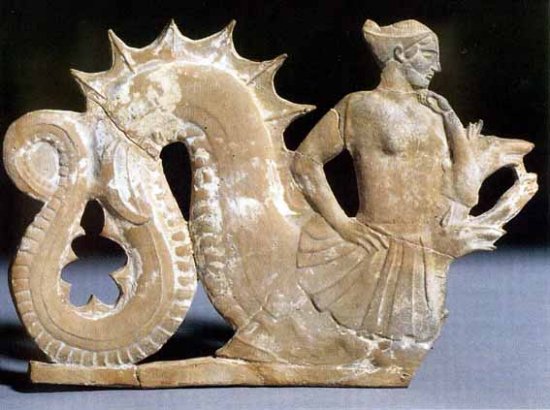
The Sirens were bird-women who lured sailors to their island with their songs. There were said to be either two or three Sirens. The song of the Sirens would cause to sailors to forget who they were and where they were going, often causing them to wreck their ships on the reefs. The Sirens were said to live on the island of Anthemoessa. Those who jumped overboard and swam to the island would be killed and devoured by the Sirens, or they would just simply waste away, listening to their songs.
There has been lots of speculation about what they sang, that would lure the sailors to their deaths. Some thought that the songs were different for each sailor, whereas others said that it was not the words, but it was the magical qualities of their voices that lured sailors.
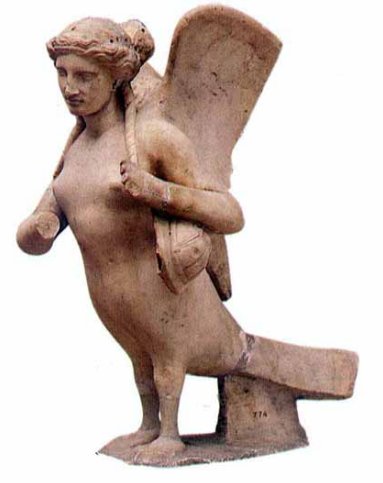
Siren
Statue for grave, 4th century BC
Archaeological National Museum, Athens
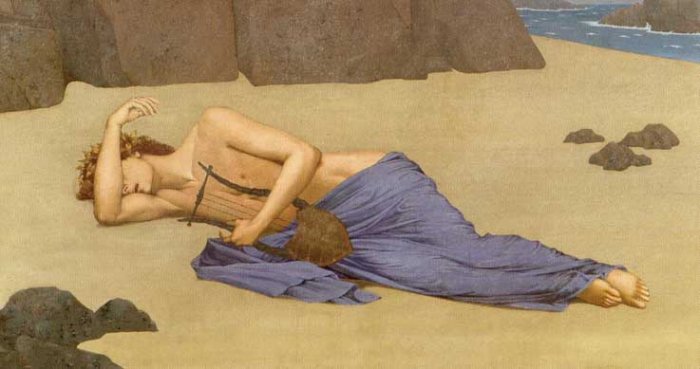
The Argonauts managed to escape the Sirens’ song because of the great musician, Orpheus. Orpheus played his lyre so beautifully that it drowned out the songs from the Sirens. Only one Argonaut could not resist the Sirens’ song, probably because his hearing was better than the other Argonauts. Butes, the son of Teleon or Poseidon and Zeuxippe, jumped overboard, swimming towards his death. Aphrodite took pity on Butes and spirited the hero away to Lilybaeum, in Sicily, where he became the goddess’ lover.
In the Odyssey, Circe warned Odysseus about the Sirens’ seductive song, telling the hero the measures he must take to protect his crew. It was simply plugging their ears with bees-wax. However, Circe knew that Odysseus was curious about the song. Circe suggested that her lover should have himself tied to the ship’s mast until they passed the island.